
Hello new..new age piano?
It turns out that the year is almost 2023 and the 1800's have finally passed. The transition of classical to new age, to..new..new age? has come. Now even the great Ludwig van Beethoven is being challenged to hold his reign over the solo piano world. The style of piano has been fractured into many categories over the past thirty or forty years.
OF COURSE I'm being facetious. Classical will obviously be enjoyed not only by the great pianist that play it, but also the millions of now and future listeners. This does bring up a good point though.
"What are you learning piano for?"
While all perfection comes from practice, practice, practice.This point matters more than you think!! Surprisingly it might be logical to pick up your latest edition of, "piano for dummies" and hammer away at it. Lets first break down the different answers you could of had.
- I Want to play a few songs in my free time (Pop, Rock, some new age)
- I Want to play classical pieces (Beethoven, Mozart, Chopin)
- I Want to compose my own songs (AKA Freestyle)
"Let me play 'Hallelujah' Dammit!"
Number one is by far the easiest and what I recommend to newcomers entering the piano world. While two or three might carry the most benefit, they are also the most discouraging and require the most dedication. First you must know if piano excites you enough to sacrifice time to it. So hell, why not start with something fun and light?
Synthesia Tutorials....Okay have fun now. that's all you need. goodbye lol Joking, but on a serious note. Synthesia tutorials are videos that play the music while having bright, colorful blocks drop down to the correct keys your suppose to press. Game changer when they came out. Here's an example.
 Source: tvtropes.org
These videos can be found all over YouTube for almost every song. Whether your looking for a Yiruma's greatest hits or Old Town Road by Lil Nas X, it will probably be there. A tip I'll insert here is to lower the YouTube video speed so you don't have to constantly keep pausing and rewinding the video. While some videos might have a key or two off, this is the best way to dive right in. Last thing I'll say on this...learn proper hand posture. Bad habits are still hard to break and not worth picking up. Here's the two notable ones.
1. Wrist and hand remains loose, but straight.  Source: Pianotels.com
2. keep those fingers spread! As I type this article I am using the two index finger clicking method. This will not fly with piano.
 Source: Pianotels.com
There's obviously more to this, but not knowing these ones can hinder your playing for more complex pieces. Yes, even pop songs require chords (more than one key pressed) or a fancy arpeggio (notes that compose a chord, played in a rising or descending order) which will allot each finger its time to shine. Other than that, GO AND HAVE FUN!! Remember this might be the easiest one, but don't get discouraged when your hands just don't naturally work together. Patience will always be a requirement.
Now...how about number two?
"You have to understand, pop music is below me"
Number two is for the classical pianist. I put this second because well...it's the polar opposite. If you've chosen this path, I bow my head to your strength and the magnificent passion you have for this blood sport. I MEAN THIS MAGNIFICENT ARTISTIC ENDEAVOR!! whoops
Maybe sythesia will work again!! :o
 Source: youtube.com/c/Rousseau
Welp...That didn't work lol
Lets debunk the first thing I hear from people before they even start their journey, "that person was born with a gift". Now, while some may be 'gifted' in their learning ability or even have the super power called 'perfect pitch', These will only shorten the journey slightly. To be a great classical pianist you must learn everything.
Sadly this one will require you to crack open the secret scrolls of knowledge, AKA Music Theory. Knowing the notes isn't enough to play a lot of classical pieces. Instead of giving you a definition of what music theory is, let me list some things it consist of.
- note representation
- sight reading (reading sheet music)
- scales (example, major and minor)
- true proper finger technique
- accent (power of strike)
- rhythm, timbre, dynamics, articulation and expression
- building chords
This is just a dip into music theory, the list could go on for a while. Don't panic though, the resources online are great! Between videos, forums, and blogs, you have everything you need at your disposal. I'm not a purist either, so I don't believe you need an expensive teacher. I Believe if your an aware person who can call yourself out when something is wrong, you'll be fine. Unlike the first one, this one requires long boring hours of practice which may start off with a repetitive warm ups too keep your skills sharp.
There is a powerful benefit though for struggling through this. If mastered...you can play anything. Unlike the first one which could take up to a month to fully get one song down, this path gives you the ability to read and play any song that has sheet music. On top of that you'll master how chords are used in music and find out quickly...pop songs are fairly repetitive and easy to play. So if this was your answer, research piano music theory and dive in :)
"WOW! Great rendition of La Campanella, play me an original?"
Number 3 is the shocking middle child. First I'll start by saying it shocked me to find out many classical pianist had trouble writing their own original songs. Like many, I assumed having an immense amount of piano knowledge was key to producing originals. My theory to why the classical path can become a hindrance may be from the fact that years could be spent on a couple classical pieces. On top of that, you must constantly be sharpening you skills with practice. Just a thought though.
To create your own original songs you must be able to let go. When I said middle child, I meant you must take from the music theory world while also being able to think in chords. The biggest mistake I see for players is to think in individual keys while creating an original piece. Everyone will have different methods and processes, but every song is comprised of chords. The chords will then allow you to think in scales, which is the individual keys. Of course you can use the scales to build chords, but then it's still scale-chord-scale. While this isn't 100%, its damn near close.
Lets call it what it is...freestyling. Just like classical, this requires (imo, funner) dedicated effort. For this you must have a basic understanding of these skills
- Chords and Progressions
- Basic concept of scales
- Pretty good hand technique
- Ability to hit bad sounding keys repeatedly and not lose your temper lol
Thought this list would be longer did ya. Believe it or not, this is still a lot of work. The nature of freestyling is being able to play outside the realm of structure, without the conscious limitation. This means if you struggle to play comfortably with two hands, you can't find how chords and scales come together, or maybe even your fingers don't have the ability to unlock creative sequences, it will almost be impossible for you to get through creating a song.
You have to be able to flow with the feeling of music. Struggling is the opposite and will restrict you from finding those hidden gems that make a great song.
Like the other two, Let me try and guide you where to start. My first recommendation is to listen to the 4 chords by the Axis of Awesome. I linked it to the text, so just click it. After you have a good chuckle, let me explain why I had you listen to a comedic band. ***or just watch the exaggerated version in the next paragraph***
First it shows you how chords can be altered slightly to change the entire sound. Didn't catch it did you? While they may be using the same chords, they altered the tempo, chord arrangement, and key arrangement at times. To notice the biggest change, listen to the transition from Journey to James blunt (first part of the song). You know what!?! Sythesia will show us a more exaggerated version. click the video :)
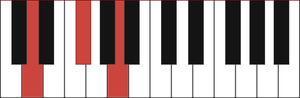
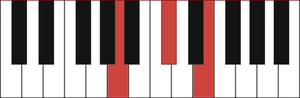
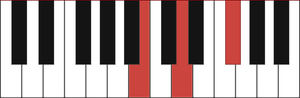
The second reason is the use of scales. Like I said earlier, chord to scale. I will put an image of the chords used. D, A, B min and G
D
A
BM
G
 Source: pianochord.org
You'll be shocked to know if your a beginner, every red key pressed is connected to a scale. This will allow you to literally know every key you can press and have it sound good. Or you could learn the chords and practice hitting keys outside of it. If it sounds good, your in the scale. If it sounds bad, you left the scale.
Practice these chords till both hands can play these unconsciously in multiple variations. I will probably make a separate post with more detail on this. Won't bore you too much now.
This isn't by any means the whole picture.This is to show you that creating your own music is not 100% music theory, but rather very specific parts. As time goes on, a lot of what's in music theory happens naturally. For example, a long sexy arpeggio or chords being broken down to single notes ect.
The Last advice is to listen to solo piano pieces (possibly mine if you'd like) as much as possible. Try to hear their chords and after your ears gets better, try even the single notes. What techniques can you hear? Are you able to attempt them yourself? A lot of my beginning lessons were just me hearing a pianist play something that made me say, "I didn't know that was possible, lets see if I can do it too".
Conclusion
When deciding where to put your efforts in your piano journey, make sure you first decide what you want. Do you just want to have fun playing some simple songs? Maybe you want to be challenged and play beautiful complex pieces? or maybe you want to be able to freely express yourself and let the music guide you. All of these will take time and dedication, but I'm confident in the end...your life will gain euphony with every key struck :)
Check out my piano music here :)